 Simon Ask
Project Overview
In a modern web landscape increasingly defined by strict privacy regulations and aggressive browser-level tracking prevention, businesses face a critical dilemma: how to maintain data-driven insights while genuinely respecting user privacy and improving site performance. This project serves as a production-grade proof of concept, demonstrating a first-party, server-side tagging architecture built on a consent-first foundation.
The Problem
Standard analytics implementations rely on third-party scripts executing directly in the visitor’s browser. This approach creates three distinct points of failure:
- Compliance Risk: In Sweden and the EU, regulations enforced by the PTS and IMY require explicit prior consent. Traditional scripts often fire before consent is captured, resulting in "consent leakage."
- Performance Degradation: Heavy third-party tracking libraries negatively impact Core Web Vitals, slowing down the user experience.
- Data Loss: When users haven't consented, browser privacy features like Safari's ITP and ad-blockers correctly limit tracking, but this also means businesses relying on client-side scripts get fragmented data even for users who have consented.
The Architectural Solution
To resolve these issues, I designed and implemented a Secure Intermediary Layer. By shifting the tracking logic from the client to a private, server-side environment, I gained complete control over data collection and processing.
Instead of the browser communicating directly with third-party vendors, it sends a consolidated payload to a private, first-party endpoint (serverside.simonask.io). The aim of this server is to ensure that no sensitive information is forwarded without prior validation and cleaning.
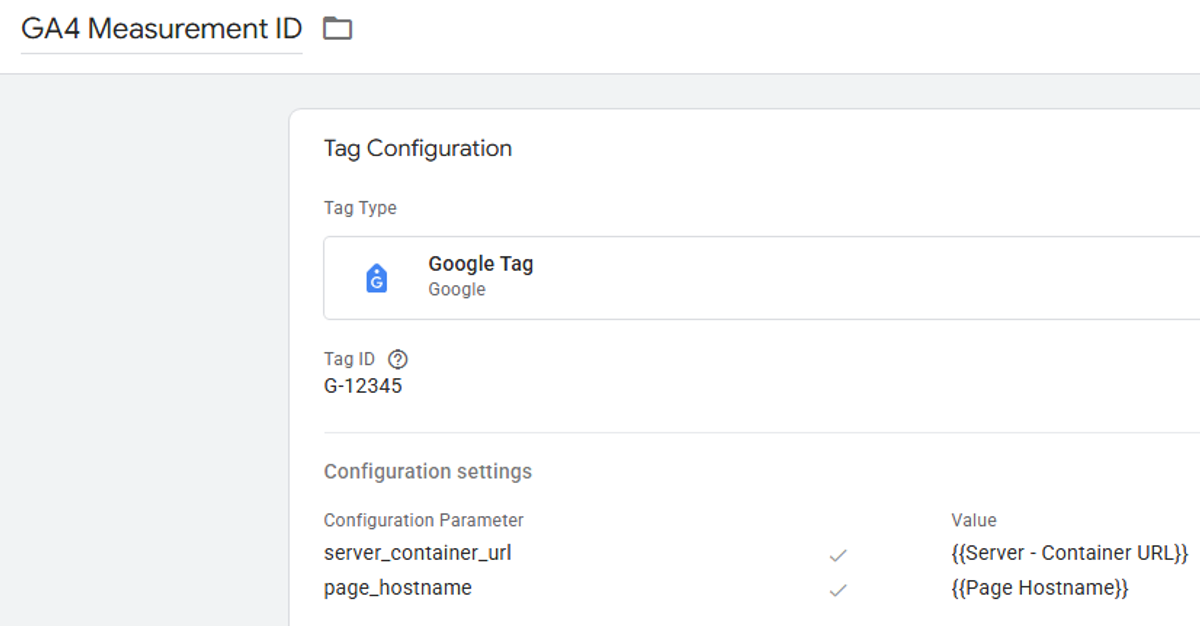
The architecture utilizes context enrichment at the client layer, where the Web GTM container attaches a page_hostname parameter to all events. The Server GTM container then acts as the central intelligence hub, using a lookup table to route traffic based on that specific parameter.
Implementation Strategy
1. Custom Consent Gate (Prior Opt-In)
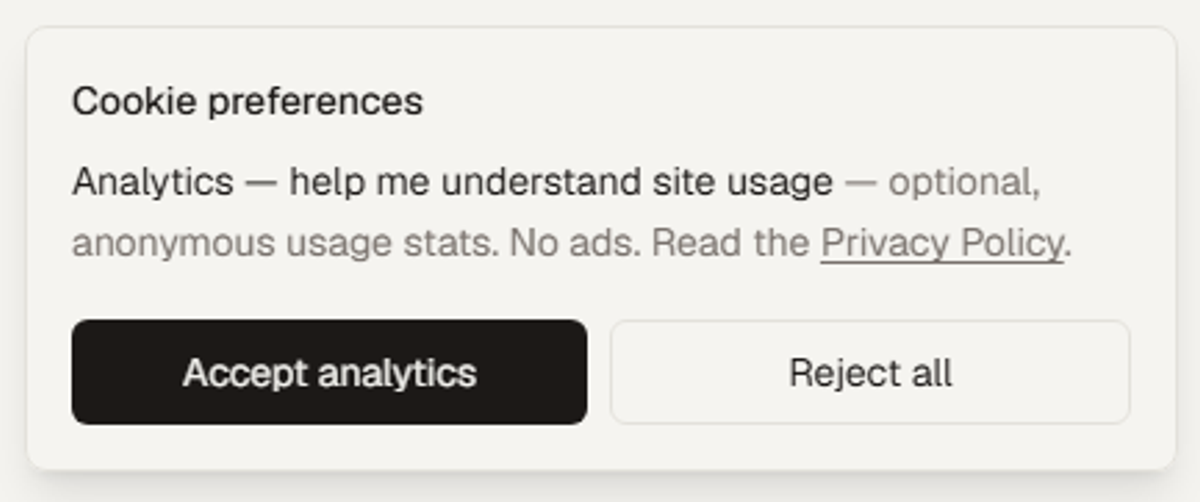
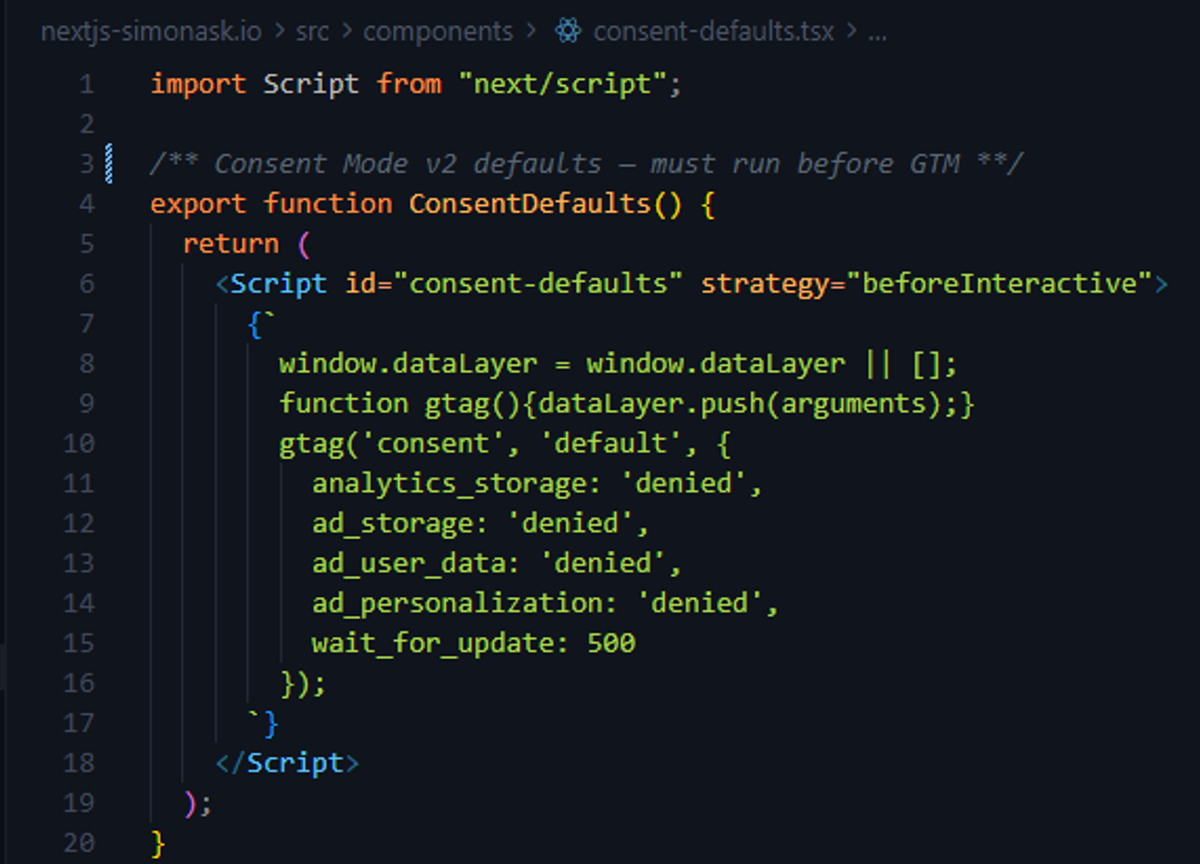
To eliminate reliance on third-party Consent Management Platforms (CMPs), I engineered a lightweight consent banner integrated directly into the Next.js framework. By injecting a non-blocking script at the document head, I enforce strict prior opt-in, ensuring that no tracking tags fire until the visitor has granted explicit consent.
2. Multi-Environment Lifecycle Management
I implemented a streamlined environment management strategy. By configuring the Web GTM container to globally inject a page_hostname parameter, I ensure that all outgoing payloads carry environment context without requiring complex client-side mapping. This eliminates the need for redundant client-side lookup tables, simplifying the deployment pipeline and ensuring that environment isolation is handled consistently at the server level.
3. Server-Side Data Governance
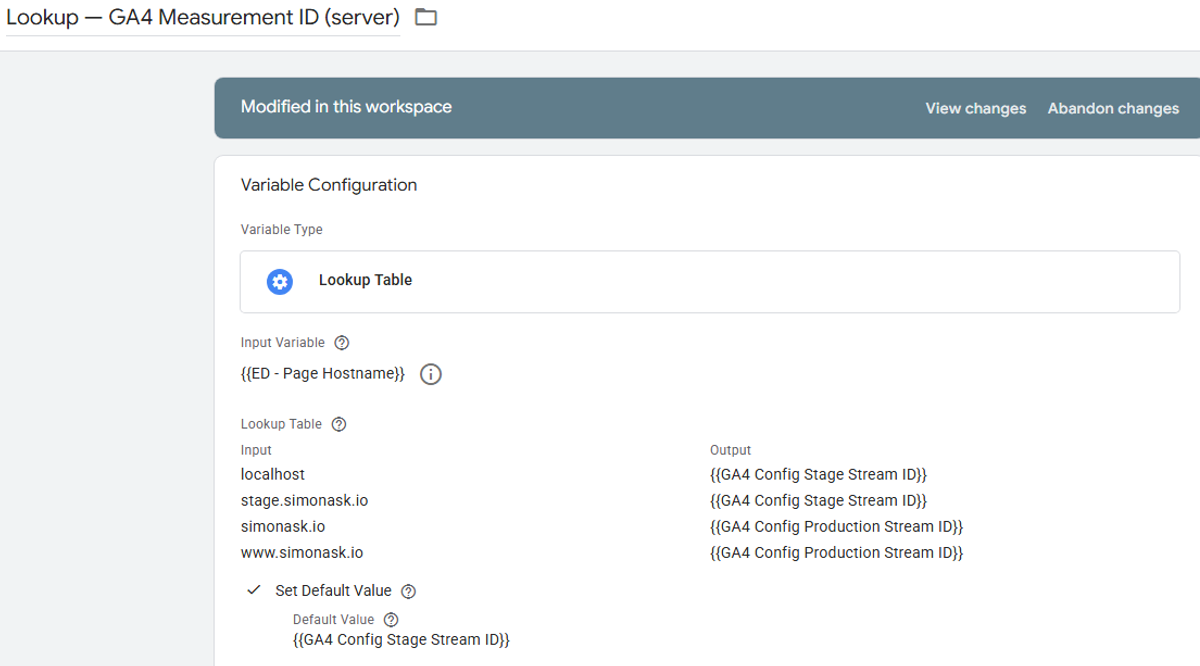
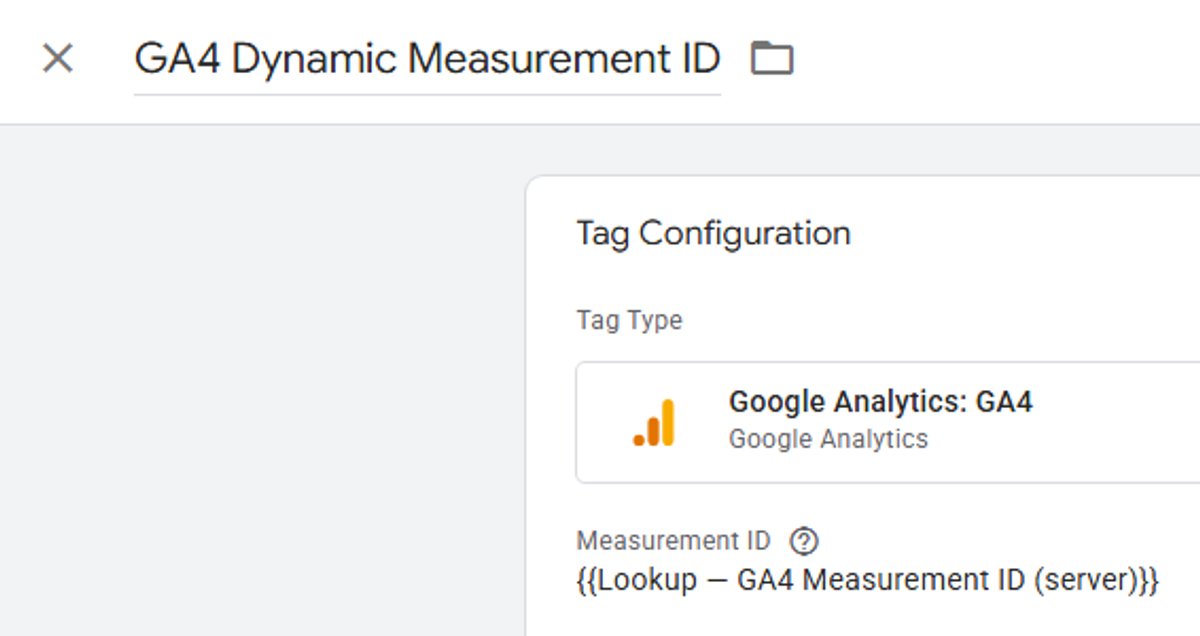
Once the consolidated payload reaches the Server GTM container, it undergoes a secondary layer of secure validation and routing. I implemented a centralized Lookup Table that evaluates the page_hostname parameter passed from the client. Based on this parameter, the server dynamically injects the correct GA4 Measurement ID. This routes data into entirely separate GA4 properties, ensuring that test sessions, debugging pings, and QA scenarios are cryptographically isolated from production data. This centralized routing provides a robust, single point of authority for data egress.
Impact and Results
- Enhanced Data Integrity: By transitioning to server-side processing, the infrastructure is more resilient to ad-blockers and browser-level cookie constraints, providing a clearer picture of actual user behavior.
- Performance Gains: Offloading tracking logic to the server reduced the browser-side script execution overhead, directly improving my site’s page load times and Core Web Vitals.
- Regulatory Compliance: The system functions as a robust privacy gatekeeper, consent is enforced at the application level before any data moves, ensuring full compliance with EU GDPR and Swedish IMY requirements by design, not as an afterthought.
Future Roadmap: Scaling & Optimization
This architecture is fully operational, with the next phase focused on advanced data durability and resilience against evolving browser restrictions:
- First-Party Script Serving: Migrate the GTM initialization script to load directly from the first-party subdomain (serverside.simonask.io/gtm.js). This bypasses traditional domain-level ad-blocking agents by serving the container as a native first-party asset.
- Mitigate CNAME Cloaking Protections: Implement Stape’s "Own CDN" feature to route traffic through a same-origin IP network. This addresses Safari's Intelligent Tracking Prevention (ITP) restrictions on CNAME record lifespans, restoring 1-to-1 cookie durability for returning users.
- Server-Side PII Redaction Layer: Leverage GTM’s server-side transformations to intercept outgoing payloads to GA4 and Meta. Because the server acts as a proxy, I plan to implement automated redaction filters to scrub raw IP addresses, strip user-agent strings, and sanitize URL query parameters (e.g., removing accidental ?email= injections) prior to third-party egress, ensuring strict compliance with IMY data-minimization guidelines.